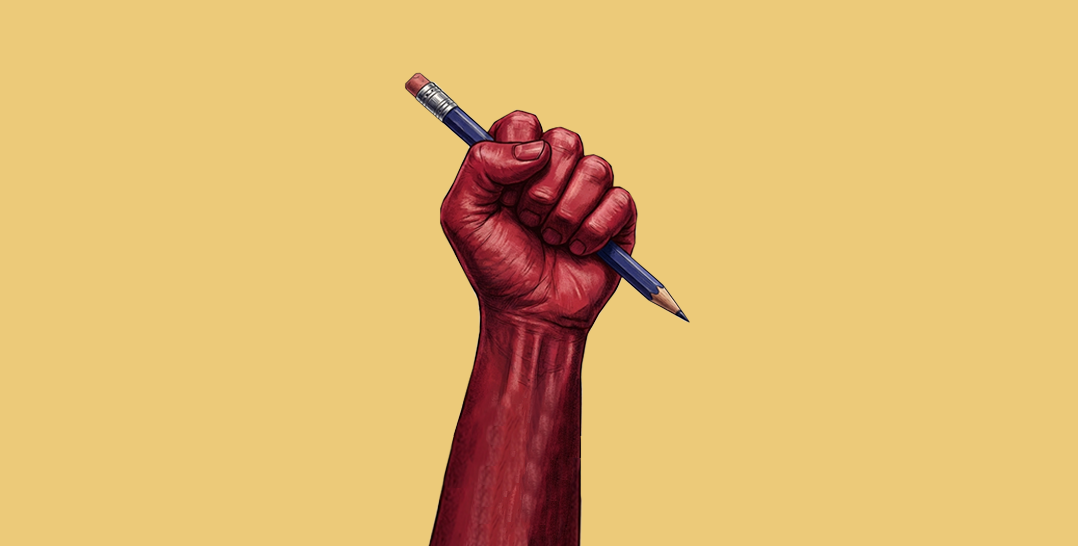
A Creative Strategist working hands-on with design tools to avoid dead ideas.

The danger of clean hands: dead ideas.

A Creative Strategist working hands-on with design tools to avoid dead ideas.

The danger of clean hands: dead ideas.

There is a tragic irony in the career path of a Creative Strategist.

You start as a junior, full of energy, desperate to make things. You write copy, you design layouts, you edit video. You get your hands dirty. Then, if you are good at it, the industry rewards you with a promotion. You become a Senior. Then a Lead. Then a Head of Department.

And with every step up the ladder, you do less of the thing you are actually good at.

Eventually, you reach the top, and you find yourself in a glass office, “directing” other people to do the work you used to love. You have swapped creation for administration. You have traded the tools for the timesheet. This is not progress. It is a slow death of the capability that matters most.


The Myth of the “Clean” Creative Strategist

We have this bizarre idea that strategy and execution are separate disciplines. We think the job of a Creative Strategist is to drift into a room, offer a vague, high-level critique (“Make it pop” or “Can we make it more Gen Z?”) and then drift out again.

But deep, structural client problems are rarely solved in a PowerPoint deck. They are solved in the mud.

You cannot crack a difficult brief by staring at it from a safe distance. You have to wrestle with it. You have to write ten terrible headlines to find the one that sings. You have to break the layout three times to find the grid that works. When strategists stop making, they stop understanding the friction of the medium. They start relying on templates. They lean on “best practice” because they have lost the muscle memory of experimentation. They become safe. And safe is the enemy of great.


The Mightnitude Imperative

At Mightnitude, we are allergic to the “ivory tower” model of agency life. We do not look for managers who used to be creatives; we look for practitioners who happen to be leaders.

Our creative approach is built on the belief that the more senior you are, the more responsibility you have to be in the tools. Why? Because you are the one with the experience to dismantle the complex problems.

This is why we reject the “cookie-cutter” approach that plagues corporate agencies.

  • Templates are the arch-enemy of TrueValue Growth™: When you use a template, you are effectively choosing to be invisible. You are prioritizing the speed of delivery over the impact of the message. A template might save you an hour today, but it costs you your distinctiveness forever. Real growth comes from the friction of creating something bespoke that fits the specific contours of the client’s problem, not forcing their problem into a pre-fab shape.
  • Process is not product: You can have the tidiest project board in the world and still ship garbage work.


We define the problem correctly not by discussing it in endless meetings, but by prototyping solutions immediately. We believe in the Noble Art of Getting Stuck in. Our Creative Strategists don’t just review the work; they are often the ones cracking the file open at 5 PM because they found a better way to solve the visual puzzle.

The Bottom Line

If your hands are clean, your ideas are probably sterile.

The only way to ensure your work actually works (that it cuts through the noise and solves the business problem) is to stay a practitioner.

Roll up your sleeves. Open the software. Pick up the pen. Don’t just direct the ship. Get back in the engine room.

There is a tragic irony in the career path of a Creative Strategist.

You start as a junior, full of energy, desperate to make things. You write copy, you design layouts, you edit video. You get your hands dirty. Then, if you are good at it, the industry rewards you with a promotion. You become a Senior. Then a Lead. Then a Head of Department.

And with every step up the ladder, you do less of the thing you are actually good at.

Eventually, you reach the top, and you find yourself in a glass office, “directing” other people to do the work you used to love. You have swapped creation for administration. You have traded the tools for the timesheet. This is not progress. It is a slow death of the capability that matters most.


The Myth of the “Clean” Creative Strategist

We have this bizarre idea that strategy and execution are separate disciplines. We think the job of a Creative Strategist is to drift into a room, offer a vague, high-level critique (“Make it pop” or “Can we make it more Gen Z?”) and then drift out again.

But deep, structural client problems are rarely solved in a PowerPoint deck. They are solved in the mud.

You cannot crack a difficult brief by staring at it from a safe distance. You have to wrestle with it. You have to write ten terrible headlines to find the one that sings. You have to break the layout three times to find the grid that works. When strategists stop making, they stop understanding the friction of the medium. They start relying on templates. They lean on “best practice” because they have lost the muscle memory of experimentation. They become safe. And safe is the enemy of great.


The Mightnitude Imperative

At Mightnitude, we are allergic to the “ivory tower” model of agency life. We do not look for managers who used to be creatives; we look for practitioners who happen to be leaders.

Our creative approach is built on the belief that the more senior you are, the more responsibility you have to be in the tools. Why? Because you are the one with the experience to dismantle the complex problems.

This is why we reject the “cookie-cutter” approach that plagues corporate agencies.

  • Templates are the arch-enemy of TrueValue Growth™: When you use a template, you are effectively choosing to be invisible. You are prioritizing the speed of delivery over the impact of the message. A template might save you an hour today, but it costs you your distinctiveness forever. Real growth comes from the friction of creating something bespoke that fits the specific contours of the client’s problem, not forcing their problem into a pre-fab shape.
  • Process is not product: You can have the tidiest project board in the world and still ship garbage work.


We define the problem correctly not by discussing it in endless meetings, but by prototyping solutions immediately. We believe in the Noble Art of Getting Stuck in. Our Creative Strategists don’t just review the work; they are often the ones cracking the file open at 5 PM because they found a better way to solve the visual puzzle.

The Bottom Line

If your hands are clean, your ideas are probably sterile.

The only way to ensure your work actually works (that it cuts through the noise and solves the business problem) is to stay a practitioner.

Roll up your sleeves. Open the software. Pick up the pen. Don’t just direct the ship. Get back in the engine room.

Cutting through noise. This isn’t about volume; it’s about impact. We dissect the art and science of attention, moving beyond best practices to define the next generation of resonant brand artifacts. The focus is on why it works, not just that it works.

Want to go deeper? Explore more articles from this category and keep expanding your perspective.

Cutting through noise. This isn’t about volume; it’s about impact. We dissect the art and science of attention, moving beyond best practices to define the next generation of resonant brand artifacts. The focus is on why it works, not just that it works.

Want to go deeper? Explore more articles from this category and keep expanding your perspective.

Don’t wait to transform your brand.

Book a call now and let’s collaborate to create something extraordinary. Start your journey to success with Mightnitude by your side.